
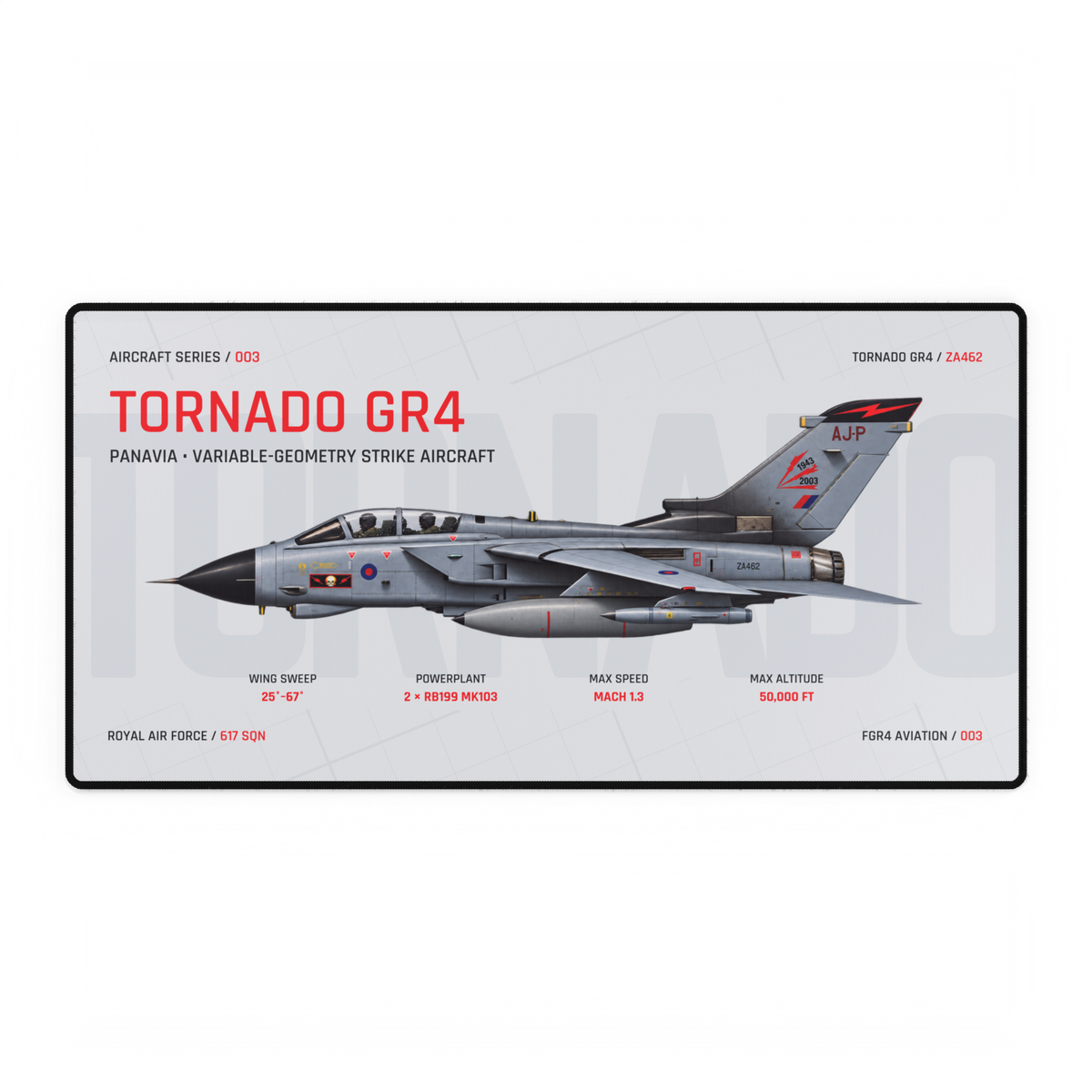
On a swing-wing aircraft, the wing glove is the fixed shoulder-like structure beside the fuselage and inboard of the moving outer wing panel. The panel changes sweep; the glove stays in place around the wing-root and pivot area. It is a useful identification clue because it keeps the same basic shape while the aircraft's overall span changes.
There is one terminology trap. In flight-test reports, glove can also mean a temporary aerodynamic cover fitted over an existing wing. Context tells you whether the writer means part of the aircraft's fixed planform or an added research surface.
Use the glove as an anchor: find the fixed area beside the fuselage, then trace the leading edge onto the outer panel that changes angle.
Where is the fixed wing glove?
Look at the junction between the fuselage and the moving wing. On the F-14, NASA technical literature describes a highly swept fixed-wing glove leading edge positioned inboard and forward of the variable-sweep panel root. In a top or three-quarter view, that fixed area forms the aircraft's broad shoulder while the outer panel pivots behind and beside it.
The word describes shape as much as location: the fixed structure appears to wrap around or fair the wing root into the fuselage. It does not mean the whole wing is fixed. The distinction is between the stationary inboard area and the movable outer panel.
Why it helps with identification
A swing-wing aircraft can present several outlines. With the panels forward, the visible span is broad. With greater sweep, the outer panels tuck closer to the fuselage. The fixed glove gives you a reference point in both views.
- Find the fuselage shoulder. Locate the fixed swept area beside the cockpit and engine section.
- Find the joint. Trace where the moving panel begins at the pivot region.
- Follow the outer leading edge. Its angle changes with sweep; the fixed glove does not move with it.
- Confirm with other clues. Tail count, engine spacing and fuselage shape remain necessary because several aircraft use variable sweep.
The F-14 variable-sweep guide explains how the moving panel changes the Tomcat's planform. The newer F-14-versus-Tornado comparison shows why the glove should support, rather than replace, fixed tail and fuselage clues.
The other meaning: a research glove
NASA also uses wing glove for a thin cover added during aerodynamic research. A NASA Tech Brief describes these covers as foam and fibreglass structures fitted over wings so researchers could study boundary layers, pressures and other airflow behaviour. NASA's F-14 Variable-Sweep Transition Flight Experiment used specially shaped gloves on the outer panels.
That research glove was an addition to the wing surface. It is not the same thing as the F-14's fixed glove area beside the fuselage. If a source mentions foam, fibreglass, instruments, laminar flow or a test programme, it probably means the experimental cover. If it describes the planform, root, pivot or leading edge in normal aircraft configuration, it may mean the fixed structural area.
Does the Tornado have the same visual idea?
The Tornado also uses variable-sweep wings, so the same reading method applies: separate the fixed inboard structure from the moving outer panel before judging the silhouette. Avoid transferring every F-14 term or detail directly onto the Tornado. Use the aircraft's own diagram or technical source when naming a particular panel.
For side-profile artwork, compare the live F-14 Tomcat Aircraft Desk Mat and Tornado GR4 Aircraft Desk Mat. Both sit in the Aircraft Series.
The short answer
A fixed wing glove is the swept shoulder or root structure beside the fuselage and inboard of a swing-wing aircraft's moving panel. It helps you locate the pivot and read changing planforms. In research reports, however, a glove can instead be a temporary aerodynamic cover. Check the context before deciding which meaning applies.
Sources
- NASA technical report: F-14A fixed-wing glove
- NASA: F-14 Tomcat
- NASA Tech Brief: Wing Covers for Aerodynamic Studies
- NASA: X-5 Research Aircraft
- RAF Museum: Test pilots
Prepared from primary technical and museum sources checked 26 October 2026. The fixed aircraft structure and removable research cover are separate uses of the word “glove”. FGR4 Aviation is not presented as affiliated with or endorsed by NASA, the RAF Museum, any operator or manufacturer.