
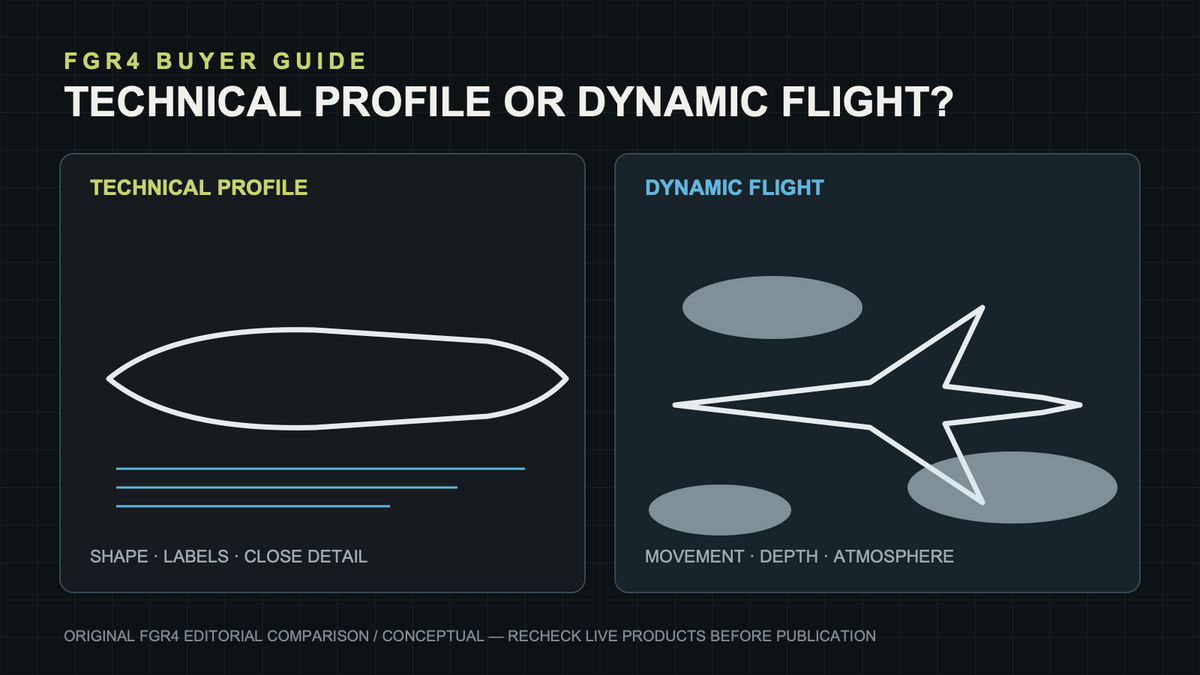
Choose technical aircraft art when you want shape, labels and design detail to lead. Choose dynamic flight art when you want movement, atmosphere and a stronger scene.
Both can work on the same aviation-led desk. The better option depends on what you want to notice first, how busy the surrounding setup is and how far away the artwork will usually be viewed.
The quick comparison
- Technical side profile: best for clear aircraft recognition, restrained layouts and closer inspection.
- Dynamic flight composition: best for energy, depth, colour and a stronger room-level focal point.
Choose technical art for shape and structure
A side-profile composition makes the aircraft’s length, nose, canopy, wing position and tail relationship easy to read. Supporting labels can reward a closer look without turning the piece into an engineering drawing.
The live Typhoon FGR4 Aircraft Desk Mat uses a side-profile design, restrained technical callouts and Night or Studio presentation. It suits a setup where the aircraft itself should dominate rather than a surrounding scene.
The guide to why side-profile aircraft artwork works on a desk mat explains how that long horizontal shape fits the format.
Choose dynamic art for movement and atmosphere
An aircraft shown in flight can create a stronger sense of speed, altitude and direction. Cloud, light and perspective add depth, which can make the artwork read more like a scene than a diagram-led composition.
The live Eurofighter Typhoon Vector Desk Mat places the aircraft in a Daylight cloud composition with concise technical detail. The aircraft remains the subject, but the atmosphere becomes part of the experience.
Match the style to viewing distance
At close range, small labels and line work can add value. From across a room, those details recede and the main silhouette, contrast and colour carry more of the composition.
If the piece will sit beneath a keyboard and mouse, ask whether the design still works when part of it is covered. A clear aircraft profile can remain legible through shape; a dynamic composition can preserve its mood through colour and direction.
Match the style to the rest of the setup
- Minimal or monochrome desk: a technical profile can extend the clean visual order.
- Bright or layered setup: a dynamic scene can connect with lighting, screens and broader wall art.
- Aircraft-first collection: repeatable side profiles make different types easier to compare.
- Statement-piece display: a flying view can create a more immediate focal point.
Technical detail does not have to feel clinical
Line work, labels and reference marks can create structure without making the artwork cold. The key is hierarchy: the aircraft should read first, supporting information second. The comparison of technical labels and aircraft-led art helps decide how much annotation belongs in the composition.
Use the same aircraft to make the choice
Comparing two different aircraft can confuse subject preference with style preference. A like-for-like Typhoon comparison is more useful: decide whether you respond more strongly to the side-profile technical treatment or the aircraft-in-flight cloud composition.
Browse the Aircraft Series for profile-led desk mats, or explore the Vector Series for dynamic flying views across desk mats and posters.
The short answer
Technical aircraft art is the stronger fit when recognition, order and close detail matter most. Dynamic flight art is the stronger fit when movement, depth and atmosphere should lead. Compare the same aircraft in both treatments, then choose the one that supports the room rather than competing with it.
Sources
Live products and sources checked 4 November 2026. Hero is an original FGR4 editorial comparison; recheck product availability and imagery before publication.