
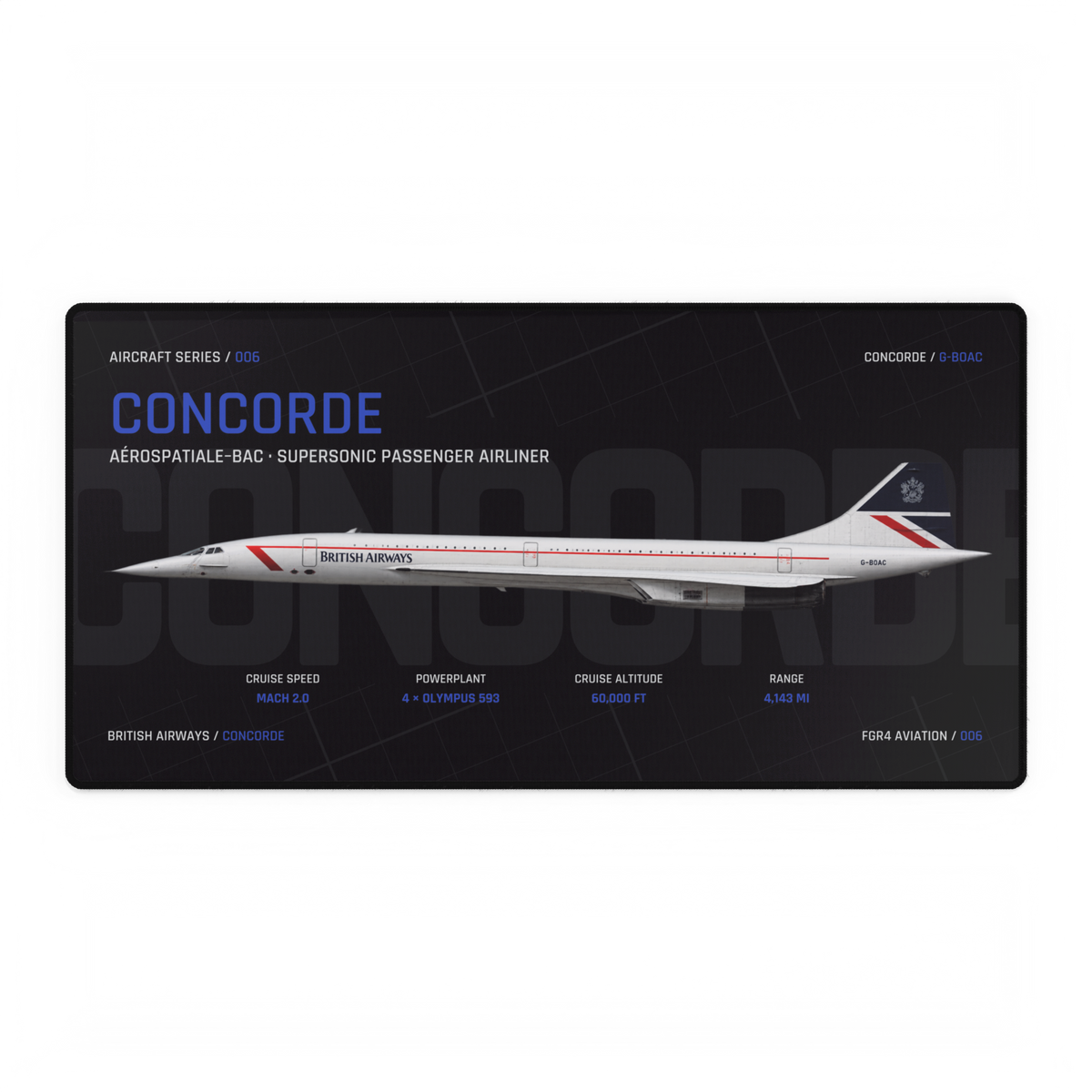
Concorde’s nose moved because one fixed shape could not do both jobs well. In flight, the aircraft needed a long, clean nose profile. Near the ground, its pilots needed a clearer view ahead during take-off and landing. The droop nose and retractable visor changed the shape to suit the phase of flight.
The key detail is that two parts moved: the hinged nose fairing could pivot down, while a glazed visor could retract into it. Reading those parts separately makes Concorde’s most famous expression much easier to understand.
The long nose created a visibility problem
Concorde’s forward fuselage extends a long way ahead of the flight deck. With the nose in its raised flight position, that streamlined form limited the pilots’ downward view when the aircraft was close to the runway.
Aerospace Bristol, home of Concorde G-BOAF, explains that the droop nose was designed to improve pilot visibility during take-off and landing. The museum’s restoration work also demonstrates that the movement used the aircraft’s original electrical selectors with hydraulic pressure supplied to the nose system.
The solution was variable geometry rather than a permanently lower nose. Lowering the forward fairing opened the pilots’ view near the ground. Raising it restored the continuous profile used in flight.
The visor and the nose were different moving parts
It is easy to treat the dark visor and pointed nose as one assembly, but they performed different movements. Detailed Concorde nose and visor documentation describes the droop nose as the hinged, unpressurised fairing ahead of the pressurised flight deck. The retractable glazed visor travelled down and forward into that fairing.
With the nose and visor raised, their outer surfaces completed Concorde’s clean flight shape. The raised visor also protected the main windscreen panels from kinetic heating. With the visor retracted and the fairing lowered, the pilots gained a better forward and downward view.
This distinction provides a useful recognition clue. Look for the dark visor around the flight-deck windows, then trace the much longer fairing from the hinge area to the pointed tip. The visor changes what covers the windscreen; the fairing changes the angle of the nose line.
Three normal shapes for three moments
Production Concorde had an intermediate 5-degree nose position and a fully lowered 12.5-degree position, as set out in the detailed nose-and-visor operating description. The full system offered a fourth configuration with the nose up and visor down, but three shapes explain the normal visual sequence most people recognise.
The fairing drooped to the intermediate position and the visor retracted, improving the view along the flight path.
The nose and visor completed the long external profile used for normal high-speed flight.
The fairing moved to its fully lowered production position for the final approach and landing view.
The angles matter because “droop nose” was not simply an on-or-off feature. The intermediate take-off position and fuller landing position changed the aircraft’s face by different amounts. That is why photographs can show Concorde with a slightly lowered nose, a pronounced landing droop or the needle-like raised profile.
A close-view checklist
When you are looking at a side-profile image, use these four checks:
- Start at the flight-deck windows. Identify the fixed main windscreen before following the nose forward.
- Find the visor. If the dark glazed section is covering the windscreen area, the visor is raised; if the main windscreen is exposed, it is retracted.
- Follow the upper nose line. A nearly continuous line into the fuselage indicates the raised flight profile. A break in angle ahead of the cockpit shows the fairing drooped.
- Judge the amount of droop. The modest 5-degree position belongs to the take-off sequence; the deeper 12.5-degree production position creates the familiar landing appearance.
Viewpoint can hide or exaggerate these cues. Our guide to aircraft side, top and front views explains why a side view is especially useful for reading length, profile and changes in angle.
Read the raised profile in the owned artwork
The owned hero above shows the live Concorde Aircraft Desk Mat in its Night Edition. The aircraft is presented in side profile with the nose and visor raised, so the long line from the pointed tip through the upper fuselage is easy to follow. Both the Night and Studio editions were available when checked for this guide.
That clean raised shape is only half the story. Compare it mentally with the phase card: lower the visor, hinge the fairing by 5 degrees for take-off, then picture the deeper production landing position. The mechanism turns one outline into three recognisable versions of the same aircraft.
Browse the live Aircraft Series to compare Concorde’s long side profile with other aircraft types. The recent guide to single-aircraft and fleet artwork can also help if you are deciding whether one distinctive shape or a wider line-up should lead your display.
Sources and product availability checked 6 October 2026. Hero image: owned FGR4 Concorde Aircraft Desk Mat Night Edition artwork showing British Airways Concorde G-BOAC with its nose and visor raised. The phase card summarises the cited production-aircraft positions; it is an editorial explainer, not an operating reference.
Awesome!
Archie Adams