
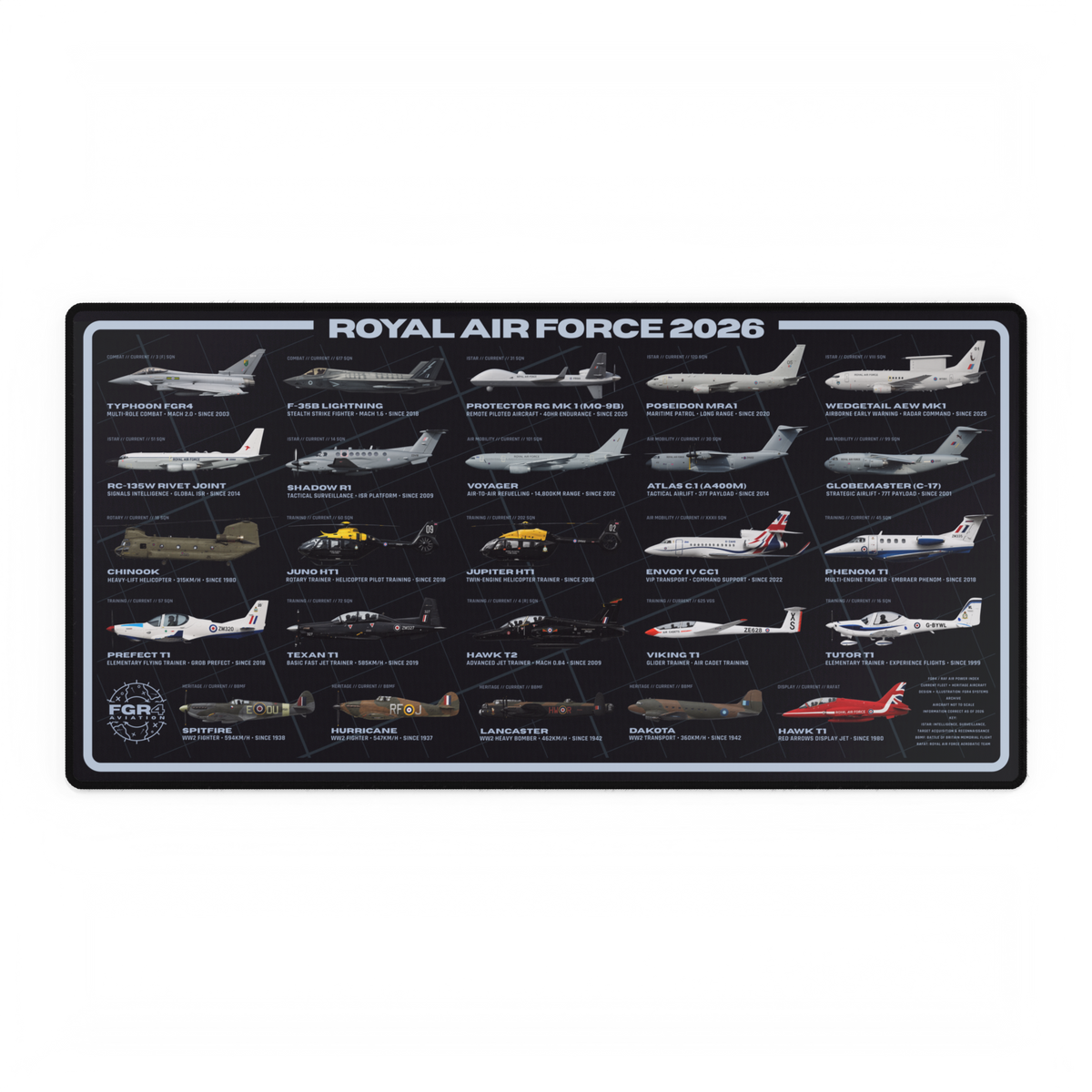
Single-aircraft artwork and fleet artwork can use the same canvas yet tell very different stories. One gives a named aircraft room to dominate. The other asks you to read relationships across a wider line-up.
The useful question is therefore not “which format is better?” It is “what should someone understand first?” If the answer is one aircraft, start with a single-aircraft layout. If the answer is the breadth of a service or era, start with a fleet layout.
Single-aircraft artwork makes identity the first read
On the live Typhoon FGR4 Aircraft Desk Mat, one side-profile aircraft occupies the main visual field. The aircraft name, airframe reference and technical graphics support that single subject rather than competing with a second type.
This is the clearest route when the aircraft itself is the point. A larger subject is easier to recognise from farther away, while a closer look can reveal the smaller labels and drawing detail. There is also less visual switching: the eye can move between the main profile, title and supporting information without first deciding which aircraft to follow.
The format suits a specific connection—a favourite aircraft, a particular silhouette or a focused aviation theme. The wider Aircraft Series applies that same one-subject structure across different types, so the deciding factor can stay with the aircraft rather than the layout.
Fleet artwork makes context the first read
The owned hero above shows the live Royal Air Force 2026 Fleet Desk Mat. Instead of one dominant profile, it uses a labelled grid of aircraft. Individual airframes are smaller, but the viewer can compare roles, proportions and generations across the same surface.
That changes the opening question from “what is this aircraft?” to “how does this line-up fit together?” A fast jet, transport, helicopter, trainer and heritage aircraft gain meaning from their neighbours. The date in the product title also makes the layout an edition: it presents a broader snapshot rather than a timeless claim about one type.
Fleet artwork rewards a closer scan because there are more subjects and labels competing for the same physical area. From farther away, the grid and overall line-up read first. At desk distance, the individual aircraft become a sequence to explore.
Compare focal point, distance and story
| Question | Single aircraft | Fleet |
|---|---|---|
| What reads first? | One named aircraft and its silhouette | The line-up, grid and relationship between types |
| What happens at distance? | The larger aircraft profile remains prominent | The composition reads as a fleet before each aircraft resolves |
| What rewards a close look? | Technical labels and detail around one subject | Comparisons across many subjects and labels |
| What story leads? | Aircraft identity | Service, era or collection context |
Neither column is a quality ranking. It describes what each composition prioritises. The exact result still depends on image quality, typography, colour and how well the artwork survives reduction. Our guide to line weight in technical aviation artwork explains why small details need a clear hierarchy, while the side, top and front view guide shows how viewpoint changes the information a single aircraft can reveal.
The three-question decision card
Use this original FGR4 editorial card before choosing a format:
Choose a single-aircraft layout when the answer is a named type. Choose a fleet layout when the answer is a service, era or collection.
For a quick read across a room, give one subject more space. For close desk viewing, a denser line-up can provide more to explore.
Pick one aircraft for a story about that machine. Pick a fleet for comparisons between roles, shapes and periods.
Make the choice with real artwork, not labels alone
Open the two product pages at the same time and reduce both browser windows until the artwork is thumbnail-sized. Notice what remains legible first: the Typhoon profile or the fleet structure. Then enlarge them and compare what the closer view adds. This simple test exposes the main trade-off more clearly than a category name can.
For more examples, compare the live Fleet Series with the Aircraft Series. If you are choosing for someone else, the guide to finding their favourite aircraft before buying artwork can help decide whether a specific type should lead.
The strongest choice is the one whose first read matches the story you want the surface to tell. One aircraft creates a clear focal identity. A fleet creates a field of relationships. Decide which of those should arrive first, then let colour and detail make the second impression.
Product availability and artwork checked 5 October 2026. Hero image: owned FGR4 Royal Air Force 2026 Fleet Desk Mat product artwork. The comparison describes the observable layouts of the linked products; it does not claim a universal customer preference.