TRANSMISSION BODY
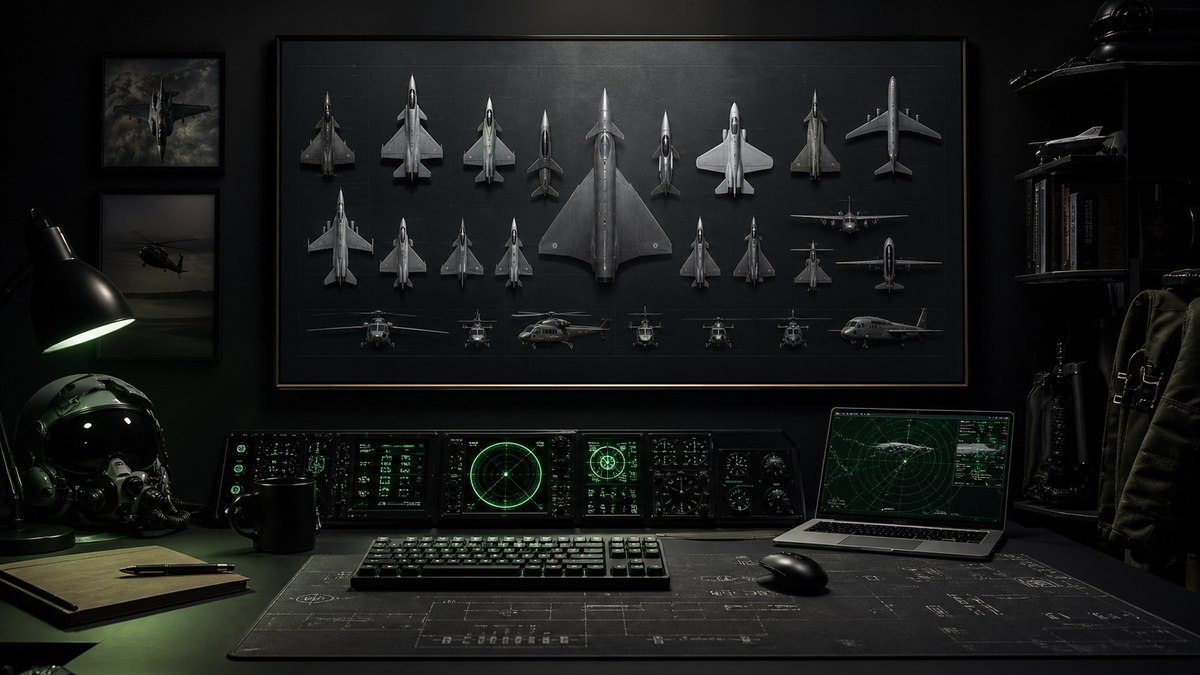
The Royal Air Force 2026 Fleet Poster works because it does more than decorate a wall. It turns the current RAF force mix into something you can read at a glance, from front-line fast jets and carrier-strike links through to heavy air mobility and the broader shape of UK air power.
That is the difference between a generic aviation print and a proper fleet-led wall piece. A good poster should give the room context. It should remind you how the service fits together, not just show one aircraft in isolation.
This product story looks at why the Royal Air Force 2026 Fleet Poster lands so well for RAF enthusiasts, what makes the 2026 fleet picture visually strong, and how to build a cleaner workstation around it.
Why the current RAF fleet makes a strong briefing-board subject
The RAF's modern line-up has a useful mix of shapes, missions and recognisable identities. The Typhoon FGR4 still carries the sharp fast-jet profile most people associate with current RAF quick reaction and expeditionary combat air power. The F-35B Lightning brings the carrier-strike and low-observable chapter into the same picture. The Atlas C.1 adds heavy tactical lift, while the wider support and training fleet completes the story of a service that is broader than its headline fighters.
That variety matters in a poster format. A single-aircraft print lives or dies by one silhouette. A fleet board has to work as a coordinated overview. The 2026 RAF picture does exactly that because it balances iconic fast jets with aircraft that show how the force actually functions day to day.
For anyone already running the Royal Air Force 2026 Fleet Desk Mat on the desk, the poster extends the same logic onto the wall. One becomes the working surface. The other becomes the room-level reference.
What makes the poster different from a standard aviation print
Many aviation posters lean on one dramatic photograph or one large hero aircraft. That can work, but it often feels more like decoration than a considered briefing piece. The fleet poster approach is stronger for collectors and desk setup fans because it is structured. It gives the eye several entry points and rewards a closer look.
The value is not only visual. It is also contextual. When Typhoon, F-35B and Atlas appear inside the same design language, the print says something useful about the RAF rather than only repeating familiar jet imagery.
That is why the poster pairs especially well with aircraft-specific products. A wall display can hold the wider service story while a desk mat carries the more focused subject. If your main desk centrepiece is the Royal Air Force Typhoon FGR4 Desk Mat, the fleet poster gives the room broader RAF context without diluting that fast-jet identity.
Why the RAF 2026 angle feels current
The 2026 framing is important because it keeps the product anchored in the present force. It is a snapshot of where RAF capability sits now and which aircraft define the service at this moment.
That makes the poster appealing to a wider range of buyers. Enthusiasts get a clean overview of today's force mix. Cadets and younger aviation fans get something that feels current rather than retrospective. Gift buyers get a product with enough specificity to feel informed without needing to know every squadron detail in advance.
The same current-service logic carries through if you want to echo particular aircraft elsewhere in the setup. The Royal Air Force Atlas C.1 (A400M) Desk Mat brings a transport-aircraft note into the workspace, while the Royal Air Force F-35B Lightning Desk Mat pulls the fifth-generation strand into view.
How to build a cleaner workstation around it
The best use of the fleet poster is not to overload the room with competing aircraft graphics. Treat it like the wall brief. Let it handle the overview, then keep the desk itself more focused and practical.
A simple approach works best:
- Use the fleet poster as the main vertical display behind the desk.
- Choose one desk mat subject that reflects the aircraft chapter you want closest to hand.
- Keep peripherals, notebook space and keyboard placement clean so the workstation still feels like a working area rather than a display shelf.
If you want the room to stay squarely RAF-led, the Typhoon or RAF fleet desk mat are the obvious companions. If you want the wall piece to carry the RAF overview while the desk brings in carrier-strike crossover, then the RAF F-35B option is the better contrast.
Why this works for collectors, sim pilots and gift buyers
The fleet poster sits in a useful middle ground. It is broad enough to show service context, but still specific enough to feel premium. That makes it stronger than generic military decor and easier to place than a more obscure single-aircraft subject.
Collectors get a current RAF reference piece that complements aircraft-specific mats and posters. Sim pilots get a backdrop that reinforces the wider atmosphere of a mission-planning desk. Gift buyers get a product that feels deliberate and knowledgeable, especially if the recipient already follows RAF fast jets, mobility aircraft or UK air power more generally.
It also gives the setup room to evolve. You can start with the poster and a single mat, then expand later without losing coherence because the fleet board already provides the organising idea.
Final approach
The Royal Air Force 2026 Fleet Poster works best as a wall brief for the modern RAF: structured, current and easy to pair with a serious aviation workspace. It is not trying to replace an aircraft-specific centrepiece. It is there to frame the bigger story around it.
If you want to build a more coordinated RAF room, start with the poster, pair it with the Royal Air Force 2026 Fleet Desk Mat or a Typhoon-led desk surface, and then explore the wider FGR4 product collection. For more aircraft notes and product briefings, return to the FGR4 news feed.