
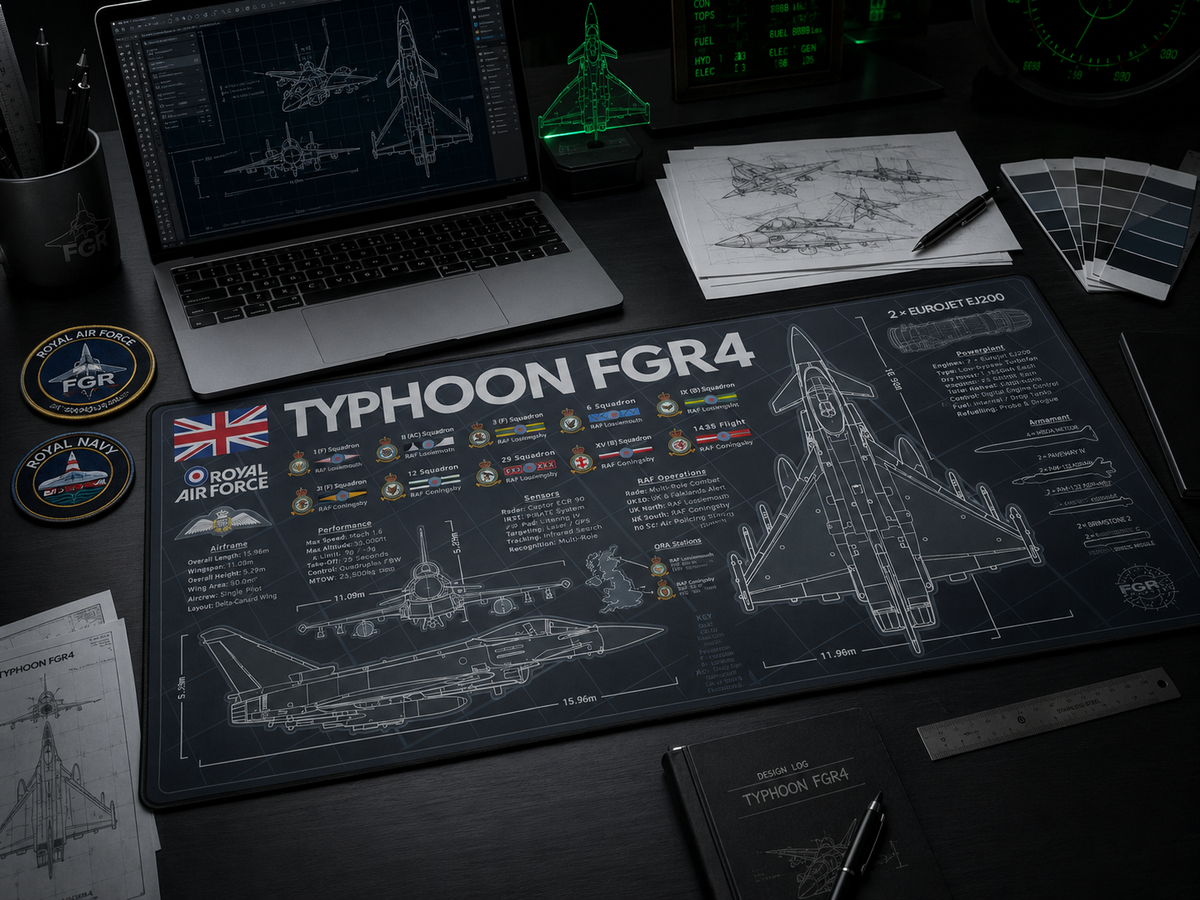
Aviation desk mats should be more than a picture of an aircraft printed onto a large surface.
For FGR4, the design process starts with the aircraft itself: its shape, role, squadron identity, technical details and the feeling it creates for aviation enthusiasts. Every mat is built to feel like a technical platform file, not a generic desk accessory.
The aim is simple: create aircraft-first desk mats for people who actually care about aviation.
Start with the aircraft
Every FGR4 design begins with the aircraft.
Before layout, colour or typography, the first question is: what makes this aircraft recognisable?
For the Typhoon FGR4, it is the delta-canard profile, the front-line RAF identity, the twin Eurojet EJ200 engines and the strong fast jet silhouette. For the F-35B Lightning II, it is the stealth shape, STOVL capability, modern carrier connection and compact fifth-generation profile. For the A400M Atlas, it is the tactical airlift role, large transport airframe and four-engine layout.
Each aircraft has its own visual language. A good design has to respect that.
Build around accurate silhouettes
The silhouette is one of the most important parts of an aviation desk mat.
Aircraft enthusiasts know when something looks wrong. The nose shape, wing planform, tail, canopy, intakes and proportions all matter. A generic fighter jet outline is not good enough when the product is meant for people who know the aircraft.
That is why FGR4 designs use multiple aircraft views where possible. Top, side and front profiles help show the aircraft properly and make the mat feel closer to a technical reference layout.
This also gives the design more depth. The aircraft is not just decoration — it becomes the structure of the whole mat.
Add technical layout detail
Once the aircraft views are in place, the next step is building the technical layout around them.
This can include dimensions, engine information, weapon profiles, squadron details, aircraft role, performance notes, map elements, grid lines and operations-style markings.
The goal is not to make the desk mat look overloaded. The goal is to make it feel detailed, useful and intentional.
Aviation design works best when it feels like a briefing document, blueprint or platform file. That is the direction FGR4 uses across its products.
Use squadron and service identity carefully
For RAF and Royal Navy aviation designs, identity matters.
The aircraft is important, but so are the squadrons, badges, stations, flags and service connections around it. These details help turn a design from a simple aircraft graphic into something that feels connected to real aviation culture.
On a Typhoon design, squadron identity can be a major part of the visual story. On a Royal Navy F-35B or Sea Harrier design, the naval aviation link becomes just as important as the aircraft itself.
These details need to be used carefully. They should support the design, not make it messy.
Choose a colour palette that fits the aircraft
Colour is one of the easiest ways to make an aviation design feel either premium or cheap.
FGR4 designs usually work best with restrained, technical colour palettes. Black, aircraft grey, navy, muted green, off-white and subtle HUD-style accents all help create a serious aviation feel.
The colourway should match the aircraft and the customer’s setup.
A dark Typhoon mat can feel tactical and operations-room inspired. A light grey version can feel cleaner and more blueprint-led. A naval aircraft mat might use darker blue-grey tones, while a stealth aircraft design might lean into deep charcoal and muted green.
The key is to make the mat feel like aviation equipment, not novelty decor.
Make the design work on a real desk
A desk mat is not just a poster.
It needs to work underneath a keyboard, mouse, laptop, joystick, notebook or flight sim controls. That changes how the design has to be built.
Important details should not all sit in one tiny area. The layout needs to stay balanced when part of the mat is covered by a keyboard or mouse. Large aircraft views need enough space to breathe, and the text should feel like part of the design rather than random filler.
This is why spacing, alignment and hierarchy are so important.
A good desk mat should still look strong even when it is being used every day.
Balance detail with clarity
Aviation enthusiasts love detail, but too much detail can make a product difficult to read.
FGR4 designs aim to balance technical information with clean visual structure. The aircraft should be the hero. The supporting details should add context without taking over.
That means using clear sections, strong headings, consistent line weight, readable spacing and a controlled amount of supporting information.
The best aviation layouts feel complex at first glance but organised when you look closer.
Design for collectors, pilots, sim users and desk setup fans
FGR4 products are designed for more than one type of aviation fan.
A collector might care most about aircraft accuracy and squadron identity. A flight sim user might care about immersion and desk setup. A pilot or veteran might care about service connection, rank, callsign or personalisation. A desk setup fan might care about colour, layout and how premium the mat looks in a workspace.
The challenge is to create designs that work across all of those audiences without becoming too generic.
That is why each mat has to feel aircraft-led first. If the aircraft detail is strong, the product has a better chance of connecting with different types of aviation enthusiasts.
Add personalisation where it makes sense
Personalisation works especially well in aviation because aviation is full of identity.
Names, callsigns, ranks and squadrons all carry meaning. When used properly, those details can turn a desk mat into something much more personal.
For custom FGR4 designs, personalisation should feel built into the platform file rather than stuck on as an afterthought. The custom details need to sit naturally within the layout and match the wider technical style.
That is what makes a personalised aviation product feel premium.
Final thoughts
Designing an aviation desk mat is about more than making something look cool.
It is about understanding the aircraft, respecting the details and building a product that feels right to the people who care about it.
For FGR4, every design starts with the platform: the aircraft, its role, its shape, its service identity and the atmosphere around it. From there, the layout, colour palette, technical data and squadron details are built into a desk mat that feels clean, detailed and usable.
The result is an aircraft-first desk mat made for aviation enthusiasts, RAF fans, Royal Navy aviation followers, flight sim users and anyone who wants their workspace to feel more connected to the aircraft they love.
Explore FGR4 aviation desk mats designed around real aircraft identity, technical detail and premium operations-room styling.